

The courting period nor the proposal included the knowledge that once I was a full-time farmer’s wife, there would be long periods that I wouldn’t see my sweet farmer. It should have come to me, but it wasn’t anything that I thought about because I was with Randy 24 /7 when I was on the farm before we were married and the six months that we commuted between the farm and St Louis.

I have discussed widows before in my blog; I know that many of you may be golf, fishing, hunting, or work widows (especially when travel is involved.) But how many of you that aren’t a farmer’s spouse ever considered such a thing as a farming widow?
When we were first married and before we built our new house on the farm where the cows live, it was a 45-minute drive between farms. The cows required, at a minimum daily visit, and when they had calves or inclement weather was moving in, it needed multiple trips to check on the cows or to stay at the farm and take shelter in the only thing available, a warm truck.
A day on the farm is filled with so many jobs that a list would not be possible, and the number of variables is endless. No one mentioned that with every task comes equipment that breaks down, requires repairs, and if not that, it requires infinite maintenance to keep everything up and going. Maintenance and repairs mean endless trips to pick up parts, tools, wiring, hoses, pumps, and whatever it takes to do the repairs.If you are a farmer or a farmer’s wife, you know all of this, and I suppose I did too on some level. Still, it never occurred to me that while Randy was tending to all the chores and traveling back and forth, I would be left alone to hold down the fort or be around to be the pet’s door attendant, or I would be the parts courier, which can be fun or scary if I must decide between A and B. I try to play it safe and have Randy call the parts store ahead of my arrival to make the purchase.
Since I started this blog, there have been many changes, and one of them is that Randy no longer must make long daily drives to check on cows or take care of the land. We built a house on top of a hill that is central to all the paddocks and overlooks the cows from all four directions while giving us a fantastic view of the Maternity Paddock, where Randy moves the pregnant cows just before the first calf of the year being born, or at least that is the plan.
The new house has been a life-changer for us. The hours and days that Randy and I were separated by a 45-minute drive when he worked alone with the cattle while I was at home worrying about him have nearly been eliminated. I am at home, and I work from home. Every time he left the house without me, I could hear his mother’s voice whispering in my ear, telling me not to let him go to the farm alone because if something happened, no one would know, and he would not be able to get help. She would tell me how she had worried every day about him being at the farm alone. Every time we left her house, I had to promise her that I would keep my eye on him. Anyone that knows Randy knows that is a tremendous request that requires constant vigilance. And to be honest, all the time she was alive, I did my best to keep my vow to her and make the trip with him as often as was possible. I even made sure that my portable MIFI would work at the farm, so, when necessary, I took my computer and worked at the farm. I honestly did not mind, and I captured some exceptional farm moments with my camera. In severe weather or when a truck was acting up, he would want me to stay home if he needed me to bring another vehicle or get help; I was worried about him every minute. When he was spending the entire day cutting hay, and I had projects of my own, and the dogs needed a door attendant, it was more reasonable for me to get my chores done and be available if he needed me to bring him something… Back then, I often made the trip with food in tow, and we enjoyed many spontaneous picnics in the back of the truck or under a tree. He usually worked until well after sundown, making for an exceptionally long summer day along with late-night suppers.
There are still times that I know I will go extended periods without seeing him for hours on end, such as discing the fields in preparation for planting, or doing maintenance on equipment in preparation for spring, or when he must put the enormous dual tires on or take them off the tractor. Long days include checking and repairing fences or cutting, splitting, and stacking firewood from downed trees. The excellent consolation now is that I can go outside and listen for the sound of the tractor, Gator, or the cows and usually find him. When all else fails, I give him a ring on the phone and hope he is somewhere he has a signal.
We have another tool that we planned during the construction of our new house, and that is the use of cameras to help us keep track of what is going on with the cows, Randy, anyone coming up the driveway or at the door. Since the house is on the hill, we have a bird’s eye view of the farm. There are cameras on all four sides of the house looking out every direction. We can sit in a cozy warm house and see where the cows are moving. I can also see if Randy is on foot, in a vehicle, feeding, or walking among the cows. I can see him moving about if he is working on equipment, which reassures me that he is safe. Those cameras help me keep my vow to Randy’s mother about making sure he is safe on the farm. They also saved us from losing our heifers, who broke free of the electric fence to go and flirt with the bull while destroying my spring bulb garden, knocking over the birdbath, and leaving deep hoof tracks in the muddy yard. We were about 50 minutes from home when our phones alerted us there was usual movement in front of our house. We checked our cameras to find the girls making their way to the paddock where the bulls were grazing. Randy contacted a neighbor and asked him to close the main gate to avoid getting out on the heavily traveled road. Fortunately, the bull was in the opposite direction from the road, and he was far more intriguing than taking a trip up the road. We got home before they were brave enough to break through the electric fence, and the bull was busy flirting with all the ladies, especially the ringleader. There were no unexpected births from this unauthorized outing. The cameras often notify us about the sun going behind the clouds or a bug buzzing a camera, but the advantages certainly outweigh the disadvantages. During calving season, they indeed come in handy. They also come equipped with night vision technology to enhance our viewing
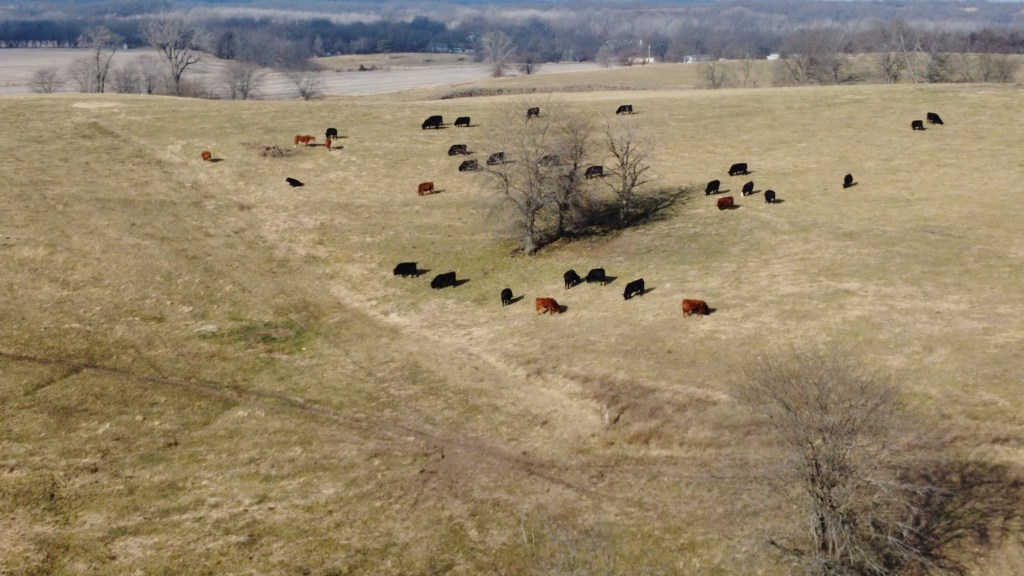
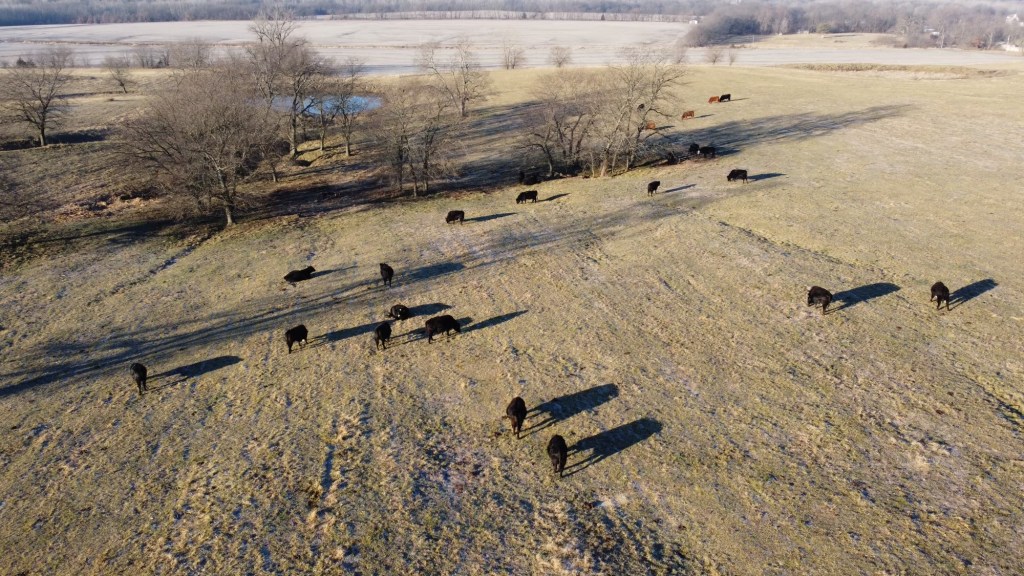
The newest form of technology that I gifted to Randy to make his job safer and warmer is a drone that he can fly over the cows to make sure everyone is where they belong and are safe. The cows are undaunted by the sight or sound of the
drone. He initially declared that a drone could not replace him because he does what no machine can do as he walks through the herd to see who looks like they may be having a baby soon or if everyone is happy and healthy. I assure him that nothing can replace his love, attention, and care for his herd, but if we do this into our old age, we must do it as smart as possible. Learning to use technology to our advantage and increase safe practices is the most innovative way I know to do that.
On the list, of things that I have learned are what jobs take priority and which ones of those that I should not make couple plans around or near because “they aren’t done until they are done.” Calving season can last from the first of February until “they are done,” usually lasting a couple of months. Cow mamas, like human mamas, cannot control gestation, labor, or due dates. There are no plans on the calendar for February that require any time away from the farm. All doctor visits are accomplished through a telehealth zoom visit. If it is a function in February that requires in-person attendance, then I know, most likely, I will be doing it alone without my date, who will be on the farm feeding hay twice a day, taking care of a new mom, baby, or preparing a warm place for them to put their babies in case there is a storm. There are rare exceptions made, and if you are included in one of these occasions, you should feel very loved. My first few Februarys were very lonely. Randy would often go to the farm before sunrise and stay all day and into the night if necessary. He often made three or four trips back and forth between the cows and home. I often said that what we could save on the gasoline bill, we could make a new house payment. It was not unusual for him to wake up in the middle of the night, feel anxious, and would put on his warmest clothes and check on the cows and babies. There was often a good reason for him to have made the trip to check on them; he has an uncanny connection with his cows. At that time, we had no electricity, running water, or a warm building for him to take refuge or a place to rest between birthing events. He had his truck. The phone connections were unreliable, making for a long day for both of us. More times than not, he did not eat all day until he returned home after dark. Consequently, we had innumerable late-night meals in February and March before building our new home. I could honestly feel like a farm widow with the long dark days—a feeling I never wanted to come close to feeling again.
Winter is not the only time the days can be long and hard. Another sunup to sundown job is baling hay, which has more variables than I could have ever imagined. Cutting hay is one of the most important things that happen in the summer. The success of the hay yield depends on how long you can feed the cows during the chilly winter months when snow is on the ground, and no grass is growing, and they especially need good nutrition to give birth and feed their babies. The quality of the feed depends on the quality of the grasses or clover that you are growing in the hay fields. A few facts about cows and hay; A cow needs approximately 8,190 pounds of hay per year, and a bale weighs around 960 pounds, divide 8,190 by 960 for a yearly need of about 8.5 bales per cow. For example, forty-five cows multiplied by 8.5 bales per cow results in a total need of 383 bales. That requires more than one hay cutting per year at our house.
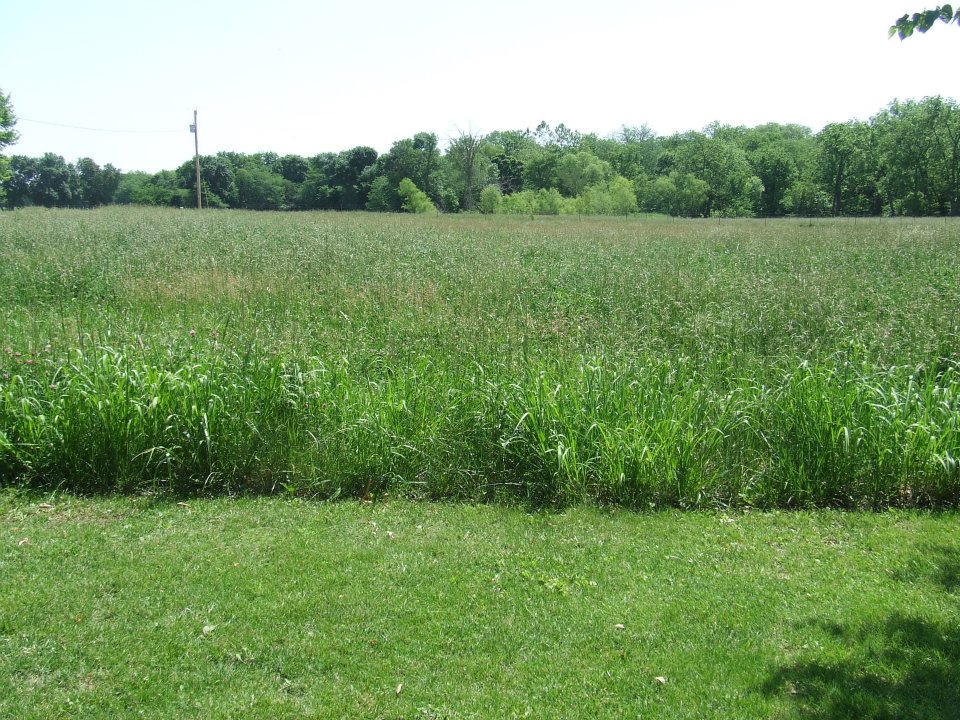
It may look like people are just out there cutting weeds and then bale them up, and I am not saying that does not happen, but there is far more thought put into most hay crops than cutting weeds. One thing to take into consideration, whatever seeds you are mowing are in that hay when rolled out for the cows to eat; they have a chance of reseeding themselves by what falls on the ground and what falls on the ground from waste after the cows have eaten the hay. Clover is a wonderful thing to reseed; reseeding thistles all over the place from the hay is not so good; they spread quickly all on their own. Given the best circumstances, you want the grasses or legumes to be cut before they go to seed because they carry more nutrition in the green leaves and stalks; once it flowers and goes to seed, the balance of nutrition changes.
I have learned that there are stages of cutting hay and time elements imposed for a successful hay crop, and the old saying “making hay while the sun shines” is founded in truth. Timing is everything in cutting hay and timing the process during days with clear weather and no rain in the forecast. I have heard Randy say that we needed rain so badly that he thinks he will cut hay on more than one occasion. There is also a time when the grass or clover is at their richest nutritional potential, and that is when it will provide the best possible nutrition to the cows when they are stressed by freezing weather, storms, being pregnant, giving birth, and by feeding an active, hungry little calf. Now to get the best hay, it takes a lot of rain, and in the spring, that often is not an issue, but once it comes hay cutting time, we need to have dry grass and three days without rain, which can be an actual balancing act. We are so much more fortunate now than when the only predictor was the Farmer’s Almanac. Today we have radars, weather channels, and 24 hours day weather predictions. Even with all of that, sometimes it is not entirely accurate. It only takes one pop-up shower to spoil a three-day plan.
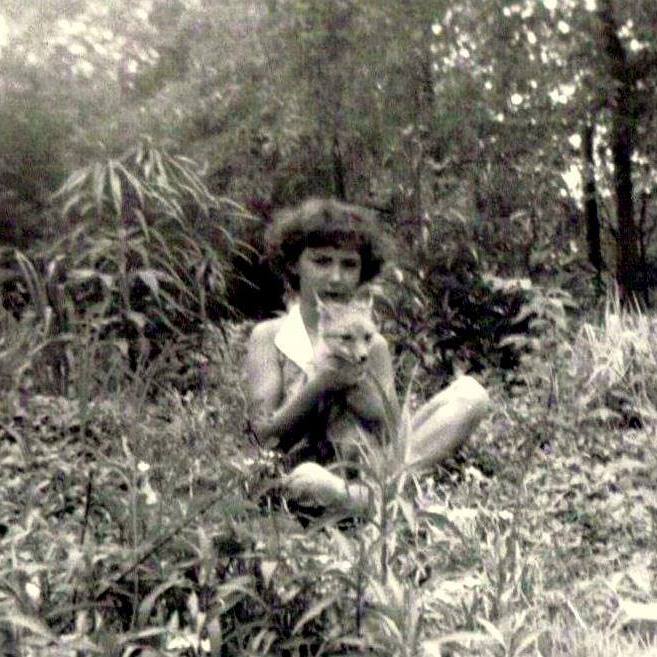
My only experience with hay before marrying Randy was with my brother, David, when I was a young person. David worked all his summers on a hay hauling team with one of his best friends. I never considered that my brother’s job depended on dry weather or what arduous work it must have been. I remember him coming home after dark, covered in hay, dirty, tired, and hungry enough he could eat a bear. He grew darker and more suntanned with every passing day. He often brought me baby rabbits and baby birds to try to nurse back to life, but the highlight of my memory of him hauling hay was when he brought me an exceedingly small baby fox pup that he and the crew were sure its mother had abandoned. It was one of the best surprises of my childhood! I cared for that little fox as though it was my baby and soon became my shadow and best friend. It was an incredibly sad day when my family decided it was getting old enough that it might become wild again and bite me, and my family released my fox into the wild, in the same field where my brother rescued him. I do not believe the fox would have been a danger to me, but that could be my naivety speaking. I am not sure it was the kindest thing to release the fox into the wild after being cared for like a puppy. I hope his hunting instinct kicked in, and he not only survived but thrived. I realize that my family put my safety first, but I missed my friend for years.
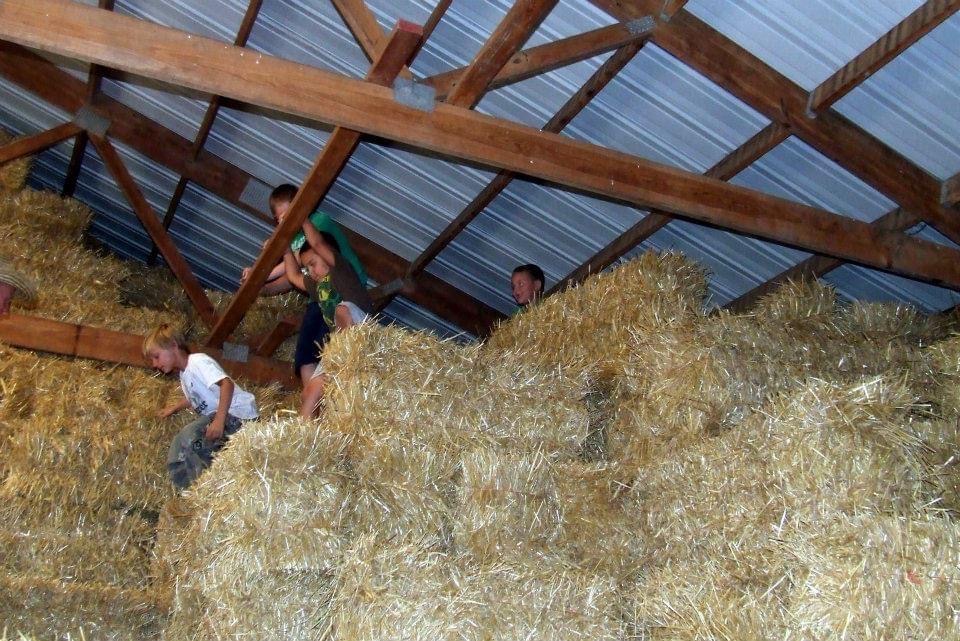
If you did not grow up on a farm, you do not know that baling hay is done in steps; it is a process that cannot be rushed. It is also a process that can go awry in the blink of an eye or by a quick-moving thunderstorm. Randy always says, when everything goes by the plan with no rain throughout the entire process he feels like the “top of the rock”, but when the rain comes during the process, he feels like the dumbest of farmers, neither of which he has any control. Baling hay and straw are similar processes, but they are different in origin and use. Straw comes from what remains in the field after wheat has been harvested and is used mainly for bedding purposes. (Photo at the top of the blog is a barn full of straw) Hay is an essential nutritional staple for winter feeding.
Resting: Once it is mowed, Randy lets it rest a day to fully dry out, hopefully without rain.
Second Stage: Raking into windrows. Randy must go over everything he has mowed with the rake on the back of the tractor and organize it into rows that make sense and are easily reached with the baler. The benefits of raking are twofold; it helps to fluff the hay that will assist in the drying process and organize it into rows so better bales can be built. This also must be done during dry weather.
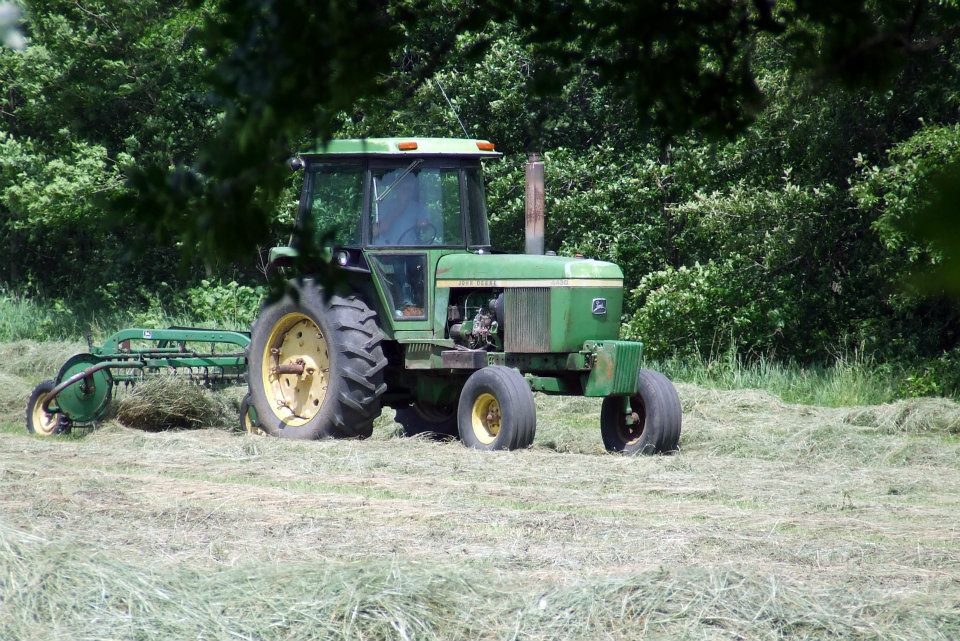
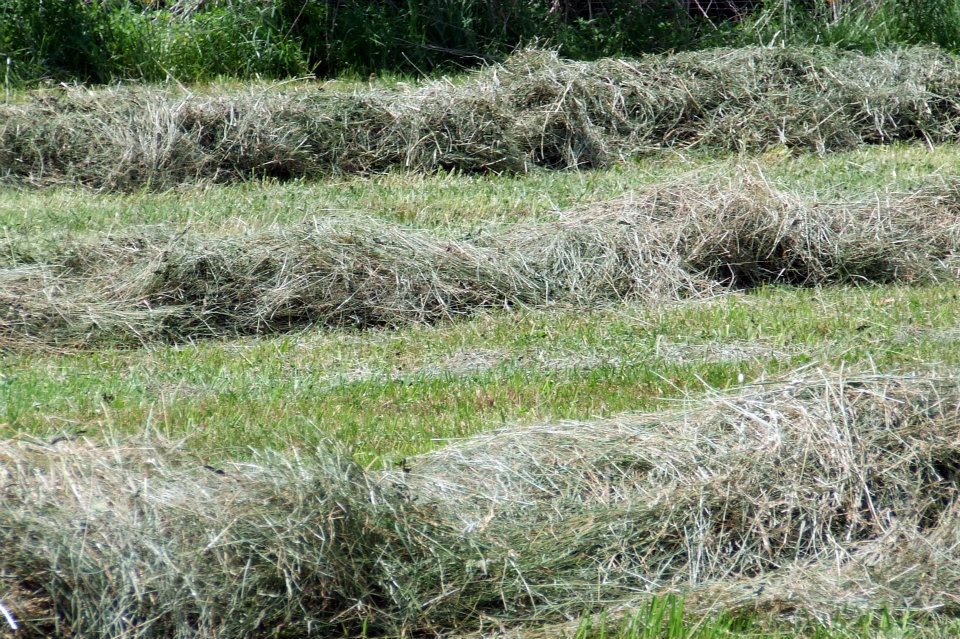
First Stage: Cutting the hay at just the right time. The right time according to the growth of the grass or clover. You want to get it while it is full, green, and before it turns to seed. Secondly, the right time of the day after the dew has burned off the fields. You do not want to cut wet grass, complicating the drying process. And then, of course, the right time according to the prediction of no rain in the forecast for at least three days. Mowing for us takes an entire day and usually goes to dusk. It is a dusty, dirty job that fills your eyes, nose, and throat full of dust and dirt and makes the eyes itch, even with a closed cab tractor.
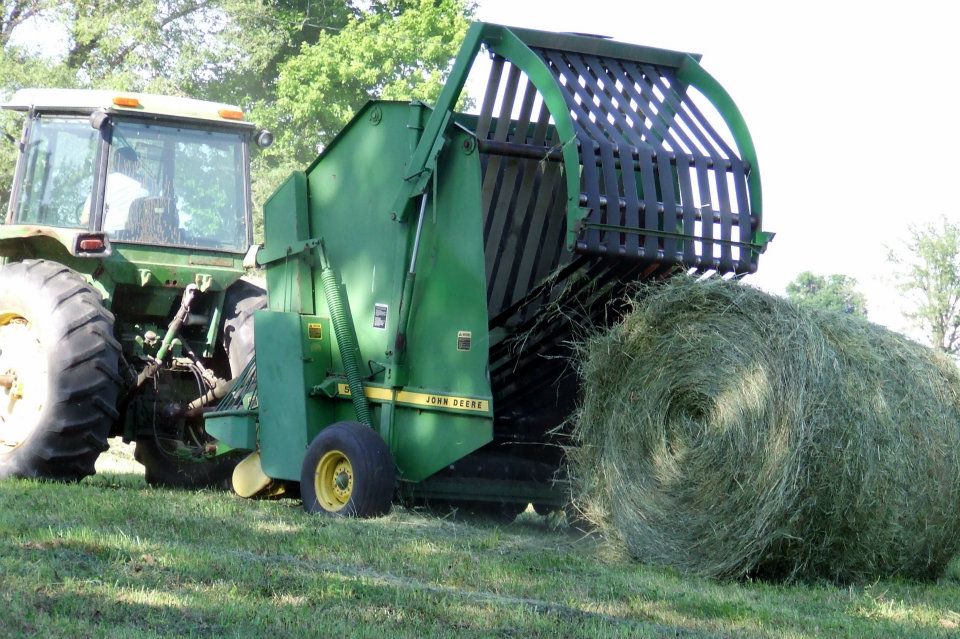
Third stage: Baling and wrapping the hay. If the baler is working correctly, there is enough bale wrap and twine in the baler, and the tractor is working great; this
Fourth: Picking up the bales and moving them to where they are stored for safekeeping until they are needed. This is accomplished by using the tractor with a hay spike to pick up the bales and load them on a trailer; then, the trailer is moved to where they are unloaded and with the tractor, stacked nicely so they will hold together until needed in the winter. This is where I can be of help. I can help by driving the truck that pulls the bale trailer. I take the trailer to where they will be loaded, and then I take them to where they are safely stored. Randy will follow the tractor to unload them with the bale spike on its front. This is what he also used to load them onto the trailer. This saves him a trip back to get the tractor after taking the trailer where it needs to go. It makes me feel like a valuable team member and less like a farm widow. Learning to drive the truck while pulling the trailer did not come without a few tense moments. Since we must communicate with hand gestures, it was highly complicated before I had cataract surgery because I could not see small hand signals and gestures, which was to his advantage at times. And since I am in a truck with the windows rolled up and the air conditioner on most of the time, loud warnings of “STOP” can’t always be heard. Working with these conditions has been a challenge for Randy. However, he remains cordial and appreciative, regardless of my weaknesses. I see much better these days, which certainly makes it easier on both of us. I swear the better I see, the better that I can hear; my family may disagree. One of my favorite memories of picking up bales was the summer before my youngest grandson started school. He and his brother were riding with me and taking turns being in the tractor with Randy. Hunter decided he would read the newspaper’s sports section to me; being upside down did not seem to impact his reading ability. I did my best to act interested and engaged in the news he was reporting. It brings a smile to my face just remembering those times. Now he is a basketball player and a varsity football player, and I imagine he gets his sports news from the internet and his cell phone.
When I first became a full-time farmer’s wife, it was in extreme contrast to my life for the last 30 years. It is a much healthier, more peaceful, content change, but it has been, beyond any doubt, a change. I was a widow in St. Louis. I was alone with my dog and my memories. I was closer to my grandchildren, but I saw the handwriting on the wall; soon, they would all be in school, and between my work and their school, time together was narrowing. My late husband’s first and last wish for me was not to spend the rest of my life alone. He made a list of suggested suitors, a list that I never pursued, all nice folks, but more brother than husband material. It broke my heart that he had accepted the fate of his diagnosis and was prepared to give me away, even if his acts were selfless acts of love. He later decided to fight and put the list on hold, which was a massive relief.
When Randy was visiting me in the city and later proposed, we agreed to be a team, that we would come into the union as equal people, with love for our families and desiring a future that we would spend together, as a team. We were more mature than many going into a marriage. We knew that there would be challenges that are present in any relationship, marriage, and blending of households, but we made a concerted decision to be a team. That may sound like an easy and logical decision, which to us it was; however, it takes work, and it means that there is a new role not only for each of us but for all our support teams to take as they become the B team, or more often they become the spectators of a new game, a new team in town. We have tried to honor their transition. For a team member to be traded to the farm team can be challenging and raise a lot of unspoken emotions. Easy it is not, but worth it? It is worth every drop of hard work, sweat and tears!
It has been ten and a half years since our team became official. We are starting our third year in our new home where the cows live. Our team grows stronger every day. Like every team, the more we practice, the stronger we become. The more we trust each other’s decisions and “plays,” the more we can anticipate being the best possible supportive team player. The less I must worry about Randy being alone with the cows and the equipment, and the better I can keep my vow to his mother as she watches him with her view from the other side.
A few thoughts I will leave you with, some jobs can’t be ignored, and making hay while the sun shines is one of them, practice is hard work, but it makes the team strong, and may you all have or find your team and every single day be the best team player you can be.
Now you know why
I LOVE THE FARM
And
I LOVE YOU RANDY
 CITY LIFE 2 FARMERS WIFE
Love your writing! The farm is hard work but more rewarding than anything I have ever done. The peace of watch cows graze, newborns rise up to all fours and nurse is wonderful. The old timers say not to name something you plan on eating…I understand! My friends say I rattle off tag numbers as names! Lol
LikeLiked by 1 person
Names or numbers it doesn’t matter, they all have their own personality ♥️ I’m glad you enjoyed it.
LikeLike