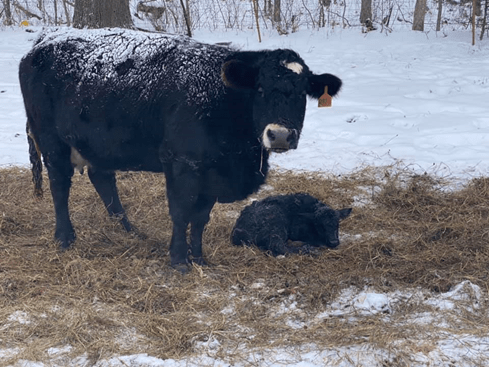
My farmer husband always says that the cows teach him so much about humans, life, and medicine.
I have had the benefit of learning more about life from cattle than I would have ever imagined before becoming a farmer’s wife. As Randy walks among our herd, they sense his love and concern, all the while he notes their health status, habits, and behaviors. Each one, just like humans have their own personalities, idiosyncrasies. They respond to trauma just like humans do, sometimes they overcome their fears, sometimes they don’t. Some like to go along with the herd, some are bullies, and some were born leaders. They tend to cling to their own. We have multiple generations within our herd, and it is not unusual to see a grandma, mom and a baby standing together, calving close together and sometimes they have the same favorite spot. I can only deduct that they recognize family. I often imagine what their conversations must be like between them as they are enjoying an afternoon snack of fresh grass… maybe it goes something like this, “when I was a young mother, we didn’t have these delicious protein rich pellets brought to us every day.” Or maybe “when I was a young heifer, I had to walk a mile up hill to get to the muddy pond!”
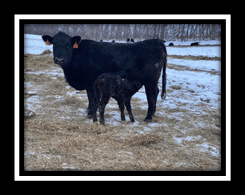
Each mother has their own birthing preferences; most prefer to be left alone by everyone. They separate themselves from the rest of the herd, isolate themselves in what becomes their favorite spot where they feel safe to go through the vulnerabilities of labor and delivery.
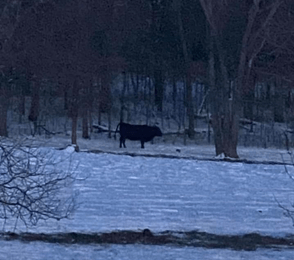
And then there are those cows who want company. It isn’t that they can do anything for the birthing mother, but their presence must bring her a calm energy for the occasion. I always wonder if it is like the comfort that one gets when you are sick and look over and see a loved one sitting with you not saying a word, just knowing that they cared enough to show up is enough to make you feel better. I am always fascinated when Randy tells me that the doula that is allowed to graze nearby is the soon to be new mother’s grandmother or mother.
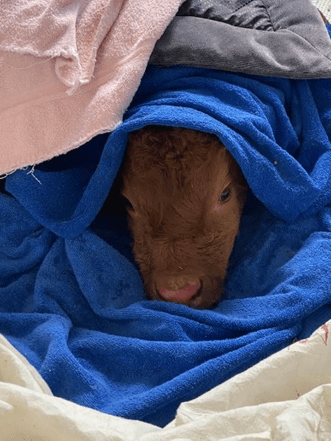
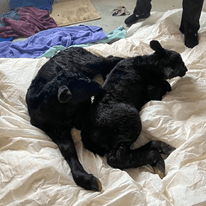
Starting in February, Annabelle and I spend a lot of time gazing out the big windows in our dining area that look out onto the maternity paddock. Once we see a cow that is separating themselves from the herd and going through the maneuvers of a mother going into labor and having contractions, we are quick to notify the boss, so he knows to put her on his radar screen, especially if it is bad weather or especially cold. Getting the baby up on their feet and nursing as soon as possible directly affects the calf’s likelihood of surviving in the bitter cold. When necessary, Randy jumps in and assist the tired mom giving the baby a big drink of warm colostrum. Not only is it important for them to eat right away, but it is also vital to wake up their digestive system as soon as possible. Sometimes it is necessary for Randy to bring the newborn into the temporary nursery in our lower level where we dry, warm, feed, thaw out frozen ears, feet, and noses so they can be taken back to mom as soon as possible. Our granddaughter, Annabelle, is an excellent nursery aid and a tremendous help during this busy time on the farm!
Each mother has their own mothering style. We have a few cows that once they have their new baby up on their feet and nursing off to the hills, they go with the baby so close you would think they would step on them, away from everyone, people and cows. They warn Randy not to get close enough to tag their baby, they do not want other cows to even think of looking or sniffing their new creation. The Mamma cow and baby stay secluded until she knows they are well feed, strong and are both ready to face the herd. The time of isolation varies from mother to mother. Some will stay apart from the herd but allow “family” to get closer to the baby. Once the mother has her confidence and probably some of her own strength back, she will introduce her calf to the rest of the herd.
Everyone celebrates the new member, especially the other babies… they kick up their heels and want to rush over to see if their new playmate is interested in chasing about with them. This is my very favorite calf watching time. They look like a herd of baby lambs, running and leaping, racing as fast as their wobbly legs will take them and then collapsing into a soft, warm pile of hay that was the remains of the most recent feeding.
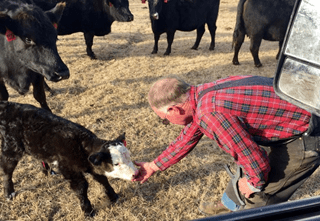
There are other mothers who aren’t phased at all by Randy’s presence and interaction with her new calf as he weighs, tags and sticks his finger in the baby’s mouth to see if it is warm and if it has a strong sucking response, and tubing them to delivery nutrition as quickly as possible. In fact, some seem to appreciate the extra assistance that he provides.
Weaning season offers us a tremendous opportunity to observe the pangs of motherhood. We all dread the day that comes when the babies are separated from the mothers, so the mothers can dry up in preparation for the next set of calves in 5-6 months and so the calves start eating feed, grass and hay while becoming more independent. I always encourage Randy to start the process according to the phase of the moon. I believe it makes the process less stressful and traumatic for all concerned, and it also reminds me of my Uncle John who did everything according to the moon and always weaned by the moon phases according to Farmers’ Almanac. In fact, when I was growing up, we did everything in our house according to the Farmers’ Almanac and moon phases. For weaning it is based on when the Moon is in the signs of Sagittarius, Capricorn, Aquarius, and Pisces. These signs rule the thighs, knees, ankles, and feet, and the dates listed in the Farmers’ Almanac are based on this rule. Unless you have personally experienced weaning calves or lived near by a farmer who was weaning calves, you may not realize how much constant crying goes on during the first three days. It seems to me that when weaning is done according to the moon there is less crying and the process goes much smoother for everyone, including being easier on the ears and heart of those nearby.
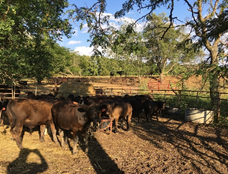
The process at our farm is the calves are separated into a smaller lot with easy access to feed and water. The mothers without fail follow them to the lot and then then Randy has to convince them with feed treats or trickery to leave the lot so he can have a gate between them and their babies. Randy doesn’t immediately put a lot of separation between them. Just like a mother who takes their child to preschool or kindergarten and stands at the door peering in to make sure they are doing OK, that their precious baby is safe, that they are being treated well by everyone involved, that they are adjusting to their surroundings without a lot of trauma or tears, the mamma cows do the very same thing. They recognize each other by their cries and moos. Most of the mamas get and stay as close to the babies as they can even if there is a fence between. They talk to them; they call them to come eat because they are in the painful stage of drying up. They cry because I imagine they not only miss their babies, but they are uncomfortable and need their babies to help them feel better. They have lost their job as the calves’ protector, food source and mentor. Before they spent their entire day caring for, watching, feeding, and bathing their beautiful creations and most are very proud of their calf. They seem to be happy when the babies become more independent, and the mothers can find some free time to take a swim in the pond or graze peacefully… but they never lose the instinct that they are still responsible for that baby. It reminds me when we are so eager for our babies to sit up, stand on their own, walk, feed themselves, start talking and once they do, our lives get simpler bit by bit but our responsibility for their care never leaves our heart… our job just changes, and it is the same with cows. When I watch them in the lot with the calves, only separated by a fence line and gate… I can’t help but feel their pain. I imagine that they are happy that they have such independent calves one minute but now, they longed for them to be back in their care. We would be irresponsible parents to not raise children to be independent, but the growing pains for that happening have sometimes made me want to lay down and cry like these mamas. As sad as it is to hear their cries back and forth, it also drives home that they will always be connected to that calf, weaned or not… independent or not… on our farm or not, their spirits are connected. I feel the same with children. It really doesn’t matter how many miles separate us from our loved ones, our spirits are connected… an invisible thread that connects all of us to everything… and it is that thread that connects me to these grieving mamas. They need no language for them to let their babies know they are still there for them.
As the days pass the crying gets less and the mamas are starting to trust the process. Their bags are not so full, so they aren’t as uncomfortable, the babies are getting use to the gourmet diet of corn and the convenience of having fresh cold water that is easily accessible to them. Everyone is moving on… Everyone has grown just a little bit more in the last few days… the mamma cows are grazing further and further away from the calves, where the grass is longer, greener and hasn’t been so over over-grazed. This is natures way of easing them further and further away from their babies.
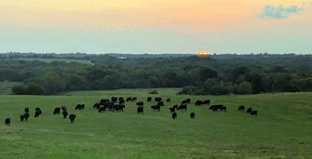
Some mamas wander back to check on the babies but the linger less and less with every passing day until they move further away, and the day comes that they stop checking on them daily. Then out of the clear blue sky they have worked their way around all the paddocks and now they are across the drive from the babies and sometimes they just lay there and watch them as they romp and play with their calf friends and sometimes the calves gather and gaze back at their mamas. Usually in this phase there is no longer the painful crying that goes on between the mother and the baby. It is more like when a mother goes to a sporting event and watches their child play with an occasional cheer just to let them know that they are loved and supported.
As much as Randy says he has learned everything about medicine from the cows, I can see how you could learn a great deal about motherhood, children growing up, stretching their wings to independence, and leaving the nest from cattle as well. What I am most reminded of daily is that we are all connected by that powerful, invisible, cosmic thread of energy that connects us to our energy source, whatever you want to call it, God, The Universe, Creation Energy… it is all the same in my book. We are all creations of the same entity with the same energy that connects us to each other. I have decided not only is Namaste (the light in my spirit, recognizes the light in your spirit, or “the divinity in me bows to the divinity in you.”) the perfect greeting for humans to each other but it is also the perfect greeting between all living things who share this thread of energy, while not needing a language to recognize it in each other. I am so fortunate to have the life, the home, the peace, and the family I have now (two and four legged), to be given the opportunity to learn the lessons I continue to learn every day from being a farmer’s wife. I wouldn’t change it for all the gold in the world…however, Randy, you can trust, that if I were offered some spare gold, I would buy you a brand-new tractor with two large buddy seats!
Namaste to you All.
I love the Farm
And
I love Randy!!!
 CITY LIFE 2 FARMERS WIFE